

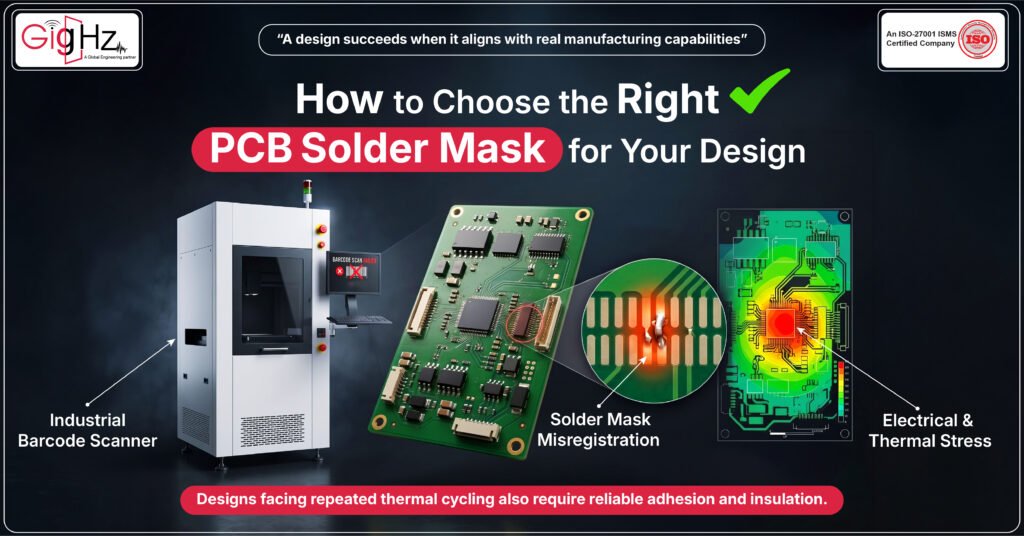
The Last Layer You Choose Can Affect the Whole Board
PCB Solder mask is more than a finishing detail. It protects copper, exposes pads, and influences PCB assembly and long-term reliability.
The right choice depends on material, coating process, feature resolution, environmental resistance, and thermal performance.
Fine-pitch components may require precise mask definition, while boards exposed to moisture or chemicals need stronger protection. Designs facing repeated thermal cycling also require reliable adhesion and insulation.
Therefore, choose solder mask according to the board’s electrical, mechanical, environmental, and manufacturing requirements—not appearance alone. Careful selection can help prevent solder bridges, exposed copper, assembly defects, and unnecessary rework.
What Is a PCB Solder Mask?
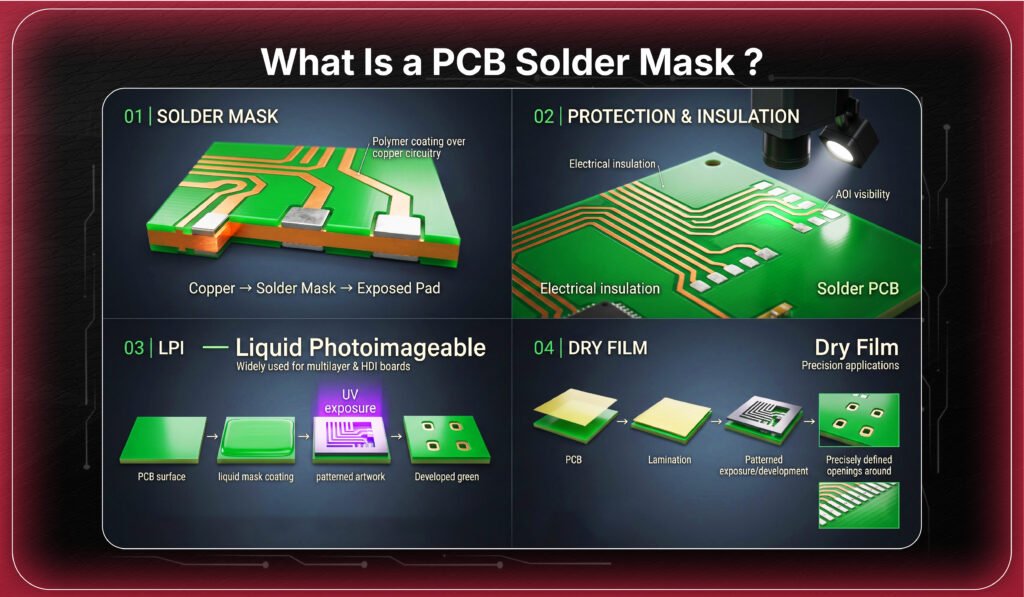
A solder mask is a polymer coating applied over the copper circuitry while leaving solder pads exposed. It protects the board during manufacturing and throughout its operational life.
Its primary functions include:
- Preventing solder bridges during assembly
- Protecting copper from oxidation and corrosion
- Providing electrical insulation
- Preventing contamination from moisture and dust
- Improving Automated Optical Inspection (AOI)
- Increasing long-term PCB reliability
The three most common solder mask materials are:
- Liquid Photoimageable (LPI) – Ideal for most commercial, multilayer, and HDI boards
- Dry Film – Used for high-precision applications
- Epoxy-Based – Suitable for simple, low-cost PCB designs
Now that we’ve covered its role, let’s see why selecting the right solder mask is so important.
Why the Right Choice Is Important
An unsuitable solder mask can affect both manufacturing quality and long-term product performance.
Common problems include:
- Solder bridging
- Copper oxidation
- Reduced electrical insulation
- Lower manufacturing yield
- Increased assembly rework
- Shortened product lifespan
To avoid these issues, it’s important to evaluate a few key factors before selecting a solder mask.
How to Choose the Right One
1. Match It to the PCB Application
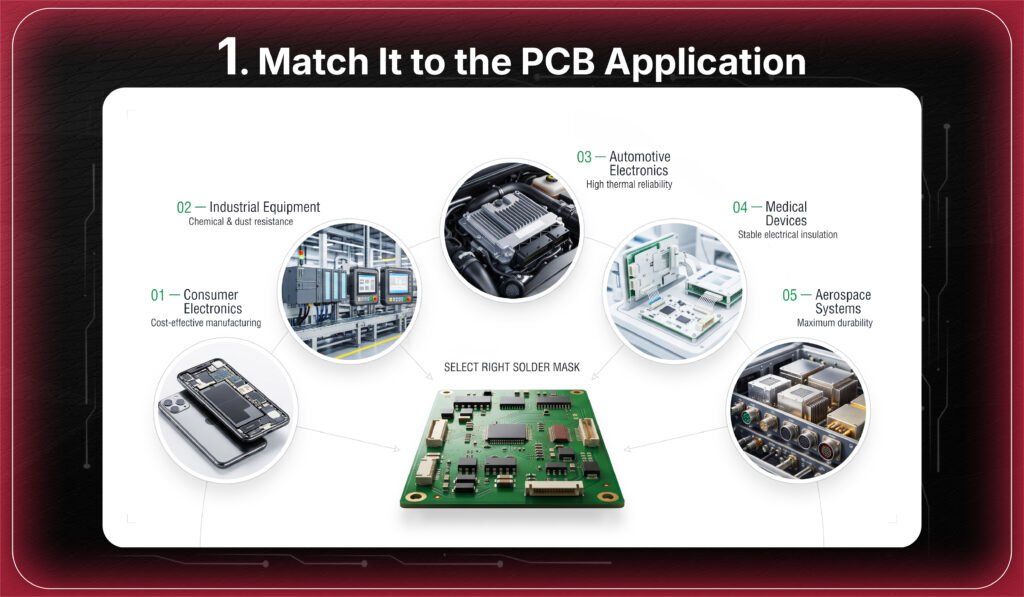
Start by identifying where the PCB will be used. Different industries require different levels of protection.
Examples include:
- Consumer electronics – Cost-effective manufacturing
- Industrial equipment – Better chemical and dust resistance
- Automotive electronics – High thermal reliability
- Medical devices – Stable electrical insulation
- Aerospace systems – Maximum durability
Once the application is defined, evaluate the operating conditions.
2. Evaluate the Operating Environment
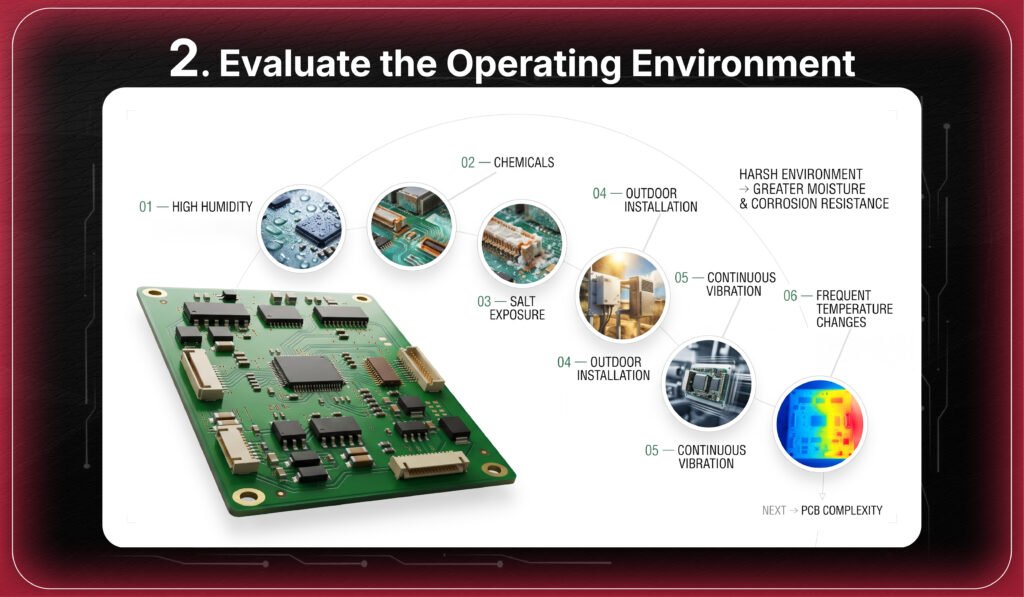
Environmental conditions greatly influence PCB reliability.
Consider whether the board will face:
- High humidity
- Chemicals
- Salt exposure
- Outdoor installation
- Continuous vibration
- Frequent temperature changes
Harsh environments require greater moisture and corrosion resistance.
After evaluating the environment, consider the complexity of the PCB itself.
3. Review Component Density
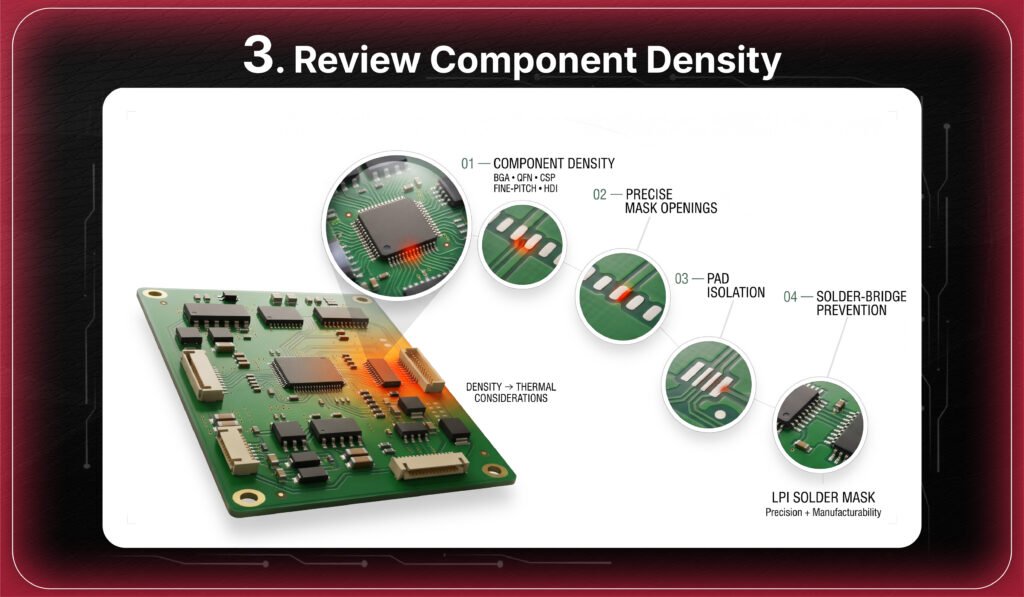
As component density increases, manufacturing precision becomes more important.
Boards using:
- BGAs
- QFNs
- CSPs
- Fine-pitch ICs
- HDI layouts
require precise solder mask openings to prevent solder bridges and maintain pad isolation.
For most high-density designs, LPI solder mask offers the best balance of precision and manufacturability.
Component density also influences thermal performance during assembly.
4. Consider Thermal Performance
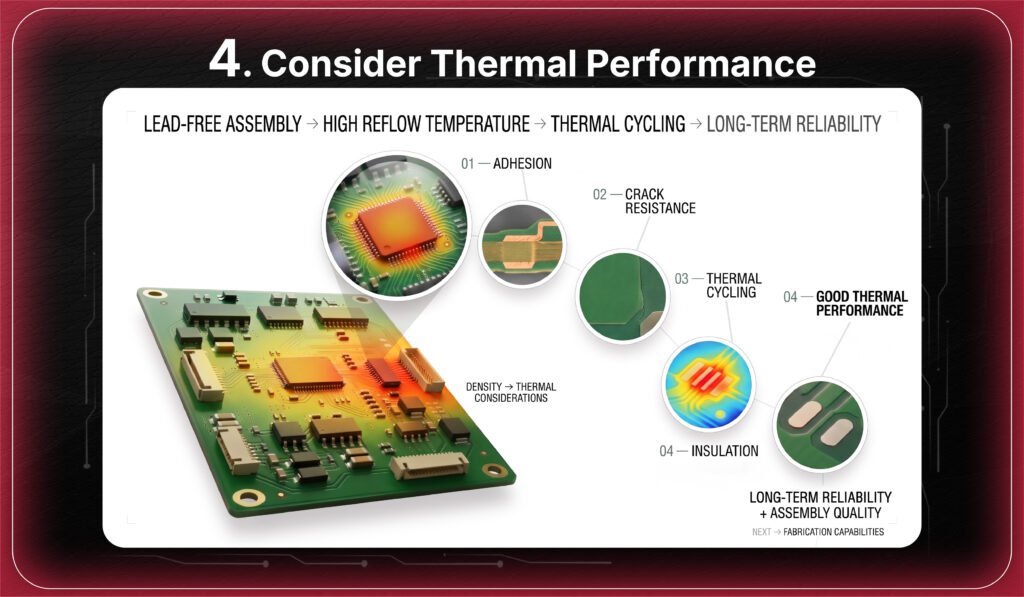
Lead-free assembly exposes PCBs to high reflow temperatures.
Choose a solder mask that can:
- Maintain adhesion
- Resist cracking
- Withstand repeated thermal cycles
- Preserve insulation properties
Good thermal performance improves long-term reliability and assembly quality.
The next step is ensuring your design aligns with fabrication capabilities.
5. Verify Manufacturing Capabilities
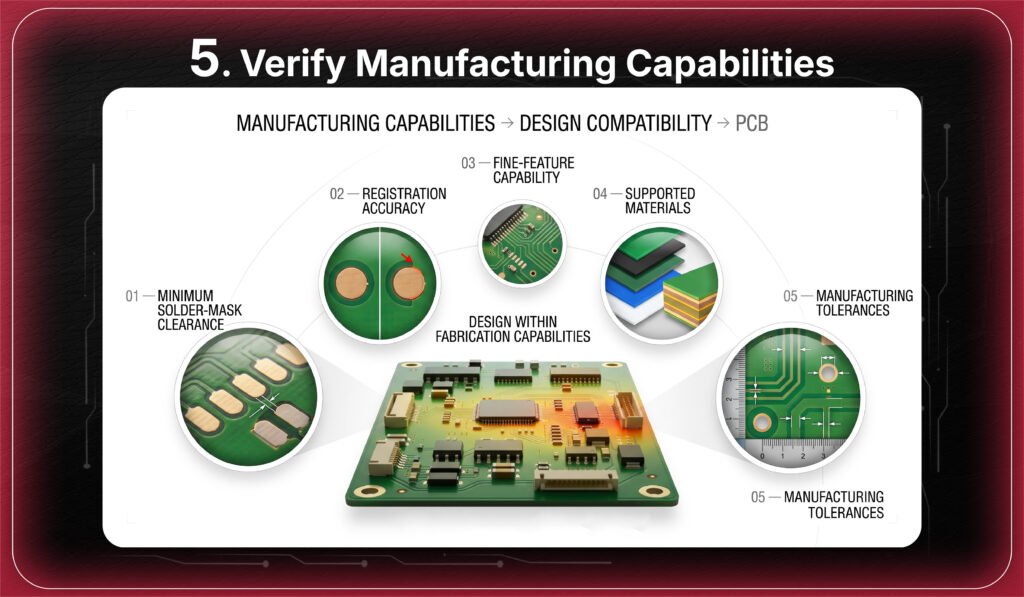
Every PCB manufacturer has different process limitations.
Before finalizing the design, confirm:
- Minimum solder mask clearance
- Registration accuracy
- Fine-feature capability
- Supported materials
- Manufacturing tolerances
Designing within fabrication capabilities helps reduce delays and production defects.
With these requirements defined, you can select the most suitable material.
6. Select the Right Material
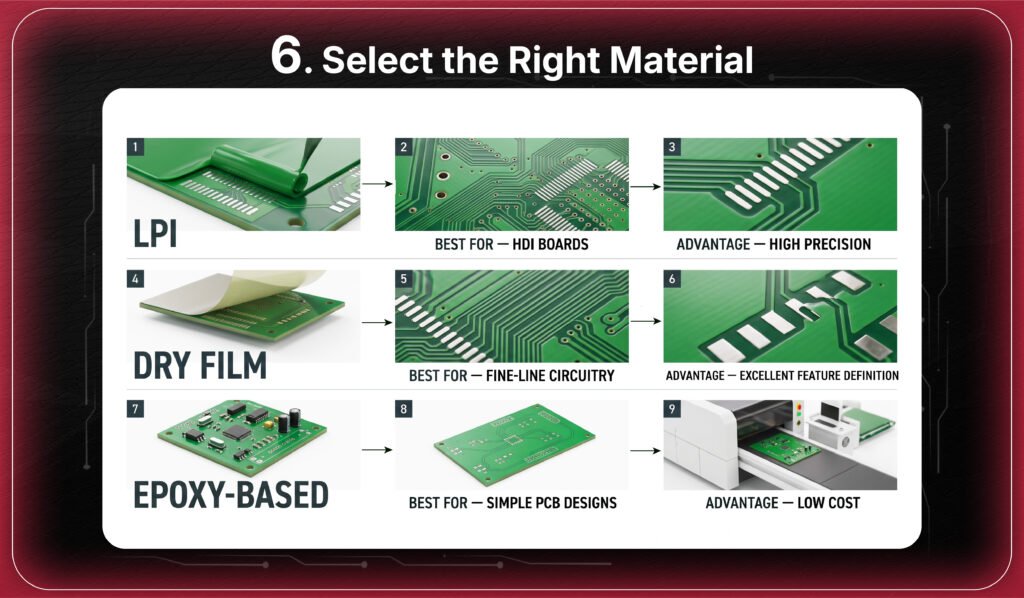
Liquid Photoimageable (LPI)
Best for
- HDI boards
- Multilayer PCBs
- Fine-pitch components
Advantages
- High precision
- Strong adhesion
- Excellent durability
Dry Film
Best for
- Fine-line circuitry
- High-precision applications
Advantages
- Excellent feature definition
- Uniform coating
Epoxy-Based
Best for
- Simple PCB designs
- Cost-sensitive projects
Advantages
- Low cost
- Easy processing
For most modern PCB designs, LPI remains the preferred choice because it balances reliability, manufacturability, and cost.
One common misconception still remains—does color matter?
7. Don't Choose Based Only on Color
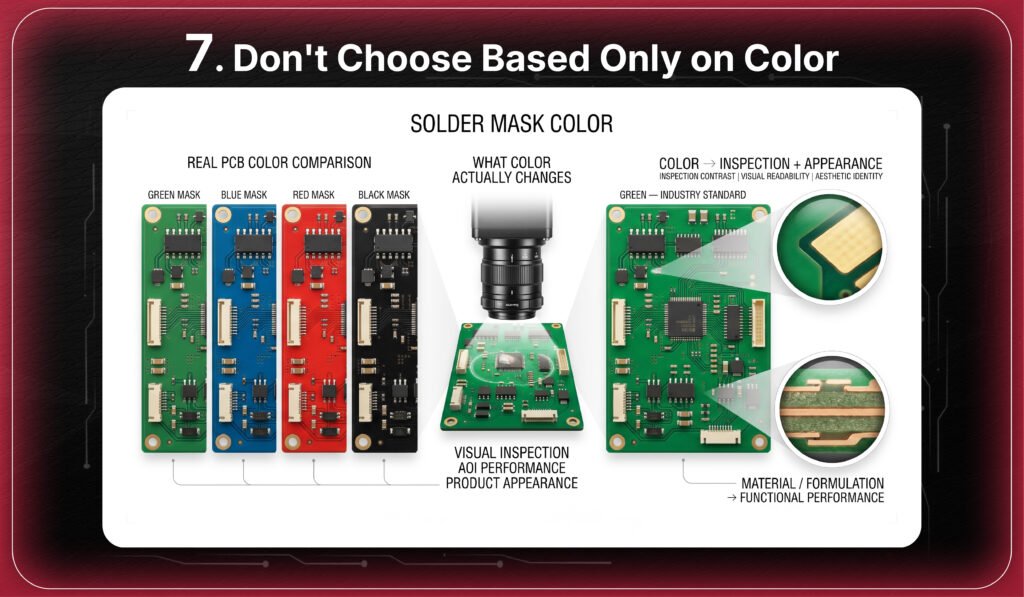
Many designers believe solder mask color affects PCB performance.
In reality, color mainly influences:
- Visual inspection
- AOI performance
- Product appearance
Green remains the industry standard because it offers excellent inspection contrast. Performance depends on the solder mask material—not its color.
Even after selecting the right solder mask, a few common mistakes can still affect manufacturing quality.
Common Selection Mistakes
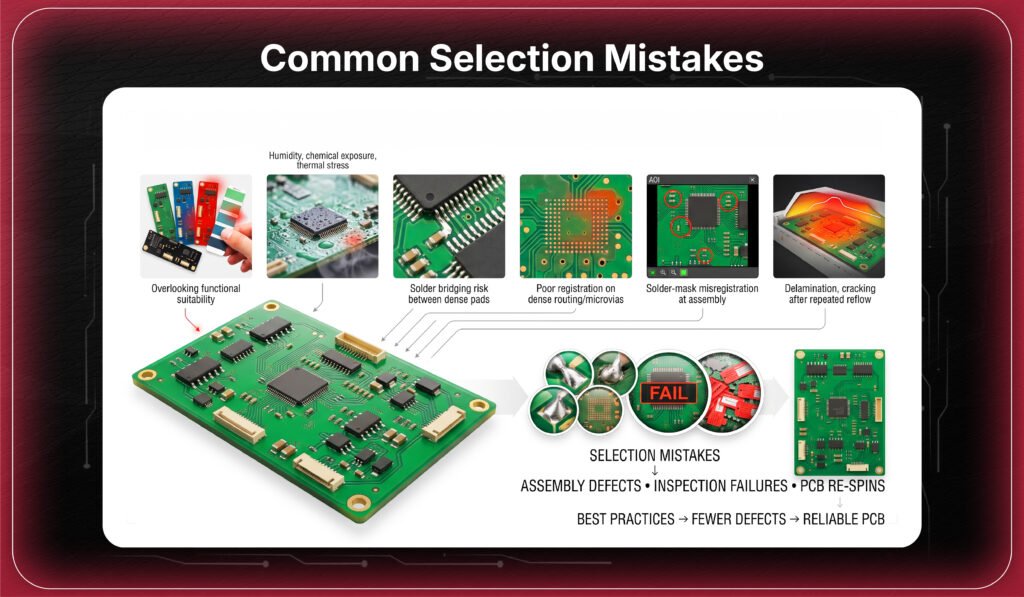
Avoid these common mistakes:
- Choosing based only on appearance
- Ignoring environmental conditions
- Using incorrect solder mask clearances
- Selecting unsuitable materials for HDI boards
- Overlooking manufacturer capabilities
- Ignoring thermal requirements
These issues often lead to assembly defects, inspection failures, and expensive PCB re-spins.
Fortunately, following a few best practices can help avoid these problems.
Best Practices
- Match the solder mask to your PCB application.
- Use LPI for HDI and fine-pitch designs.
- Verify solder mask clearances and DFM rules.
- Consider operating and thermal conditions.
- Review manufacturer capabilities before Gerber release.
Final Thought
Choosing the right PCB solder mask is more than selecting a protective coating—it is an important PCB design decision. The right material improves soldering quality, protects copper from corrosion, enhances electrical insulation, and supports reliable manufacturing.
By evaluating the application, operating environment, component density, thermal requirements, and fabrication capabilities before production begins, designers can reduce defects, improve first-pass manufacturing success, and build PCBs that perform reliably throughout their lifecycle.
Want to avoid hidden issues in your design?
Connect with us for the expert free consultation
https://calendly.com/gighz/30min
Have a PCB that needs a design review?
Get Your PCB Design Reviewed
Stuck in a loop of challenges? Always pick smart solution that works
Have you faced costly rework because 2D drawings skipped in MCAD workflows?
Effective way to prevent MCAD documentation errors recalls?
Please answer both poll questions before submitting.
Thank you for your response! 😊
Latest Post
Get Customized Engineering CAD Design Service

Book a Free Consultation Call
Partner with Gighz and bring your most innovative design concepts to life. Our engineering cad services accelerate development so you can focus on your big vision.
