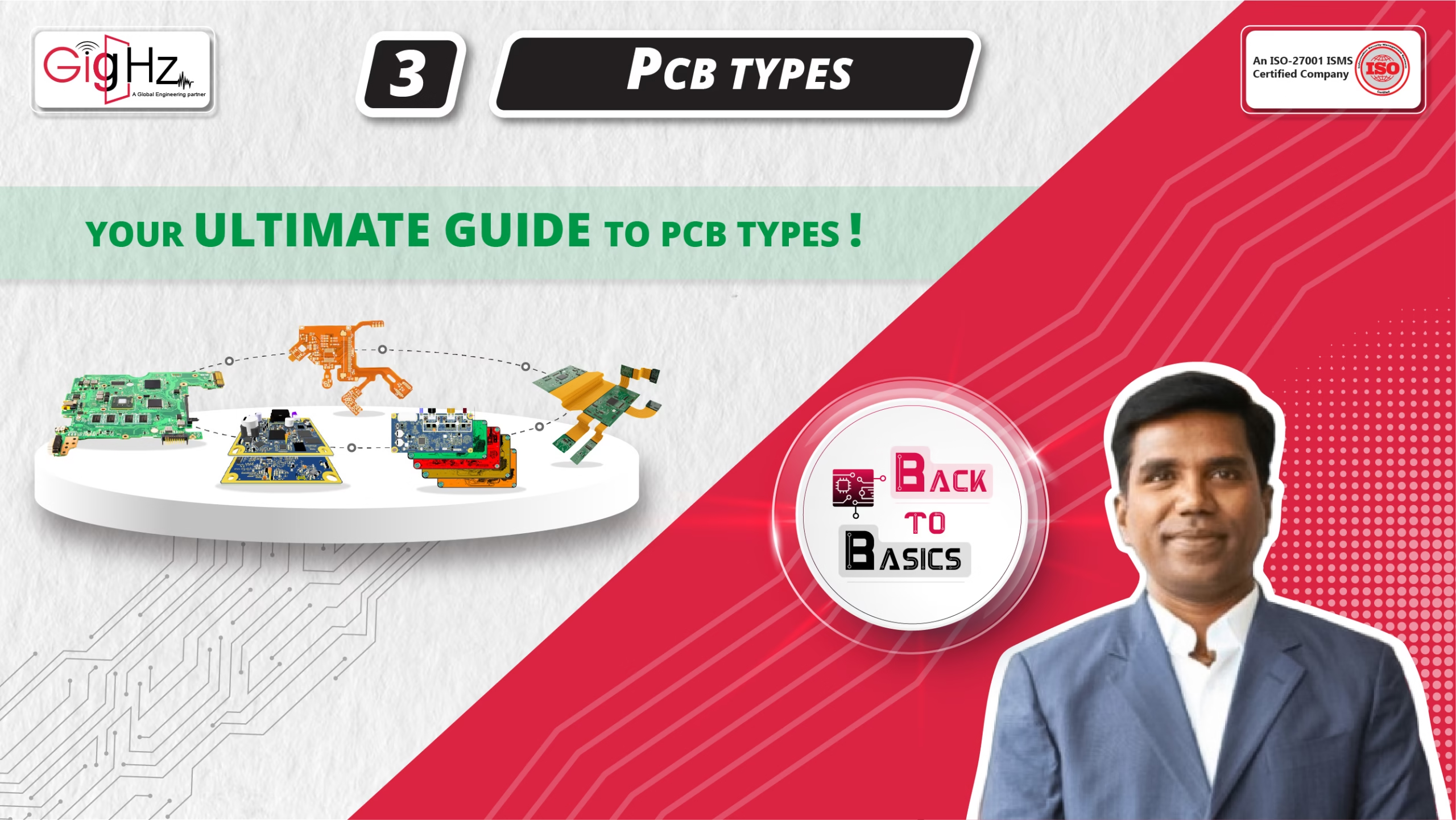
PCB Types:
Types of PCB:
PCB comes in various types depending on the complexity, material, a number of layers, Substrate used, Technology and special types of PCB based on applications.
Classification based on Layers:
In PCB development, layer classification refers to the various configurations of conductive layers, such as copper traces, ground planes, and power planes. The main types include:
1. Single-Sided PCB:
- A single-layer, or single-sided PCB, is the most basic type which, consists of a single layer of substrate material, with one side covered in a thin metal layer (i.e. Copper).
- In these types, components are mounted on one side of the board and electrical traces (Conductive pathways) on the opposite side.
Advantages:
- Simple manufacturing process.
- Low cost.
- Ideal for Simple designs.
Applications:
Basic electronic devices, such as:
- Calculators,
- Light bulbs, and Toys
Double-Sided PCB:
- Double-sided PCBs have metal conductive layers on both sides of the substrate.
- In these types, Components are mounted on both sides of the board, and vias along with electrical traces are used to connect the components on either side.
Advantages:
- Higher component density compared to single-sided PCBs.
- Supports complex circuit designs.
Applications:
- Communication devices
- Power adapters
- Audio amplifiers
Multi-Layer PCB:
- A Multi-Layer PCB consists of multiple layers of conductive copper material, separated by insulating layers.
- These layers are laminated together to form a single, compact board.
- The number of layers typically ranges from 4 to 12, with more complex designs using additional layers.
Advantages:
- Increased space for conductor patterns.
- Improved power distribution and signal integrity.
- Essential for high-speed circuits.
Applications:
High-performance devices like:
- Smartphones
- Laptops
- Medical equipment
Classification based on Materials:
In PCB development, material classification refers to the various substrates and conductive materials used in the board’s construction. The main types include:
Rigid PCB:
- A Rigid PCB is fabricated from a solid material (such as fiberglass) that prevents the board from twisting.
- These boards are composed of single or multiple layers of copper, dielectric, and a protective solder mask layer, with each layer serving specific electrical or mechanical purposes.
Advantages:
- Durable and stable for fixed installations.
- Supports high-density component
Applications:
- Wireless communication devices
- Computer motherboards
- Programmable Logic Controllers (PLCs)
- Automation systems
- Flexible PCB:
- A Flexible PCB is a type of PCB that is designed to be flexible, allowing it to be bent or folded to fit in compact spaces.
- The flexible polyimide material provides excellent flexibility, allowing the PCB to bend and conform to various shapes.
- It often used in applications where the device needs to be compact and
Advantages:
- Lightweight and compact.
- Offers the advantage of flexibility compared than the Rigid PCB.
- Suitable for dynamic and space-constrained
Applications:
Devices requiring mobility and compact designs, such as:
- Smartwatches
- Automotive electronics
- Medical devices (e.g., endoscopes)
- Cameras
Rigid-Flex PCB:
- A Rigid-Flex PCB combines both rigid and flexible PCB technologies in one board.
- These PCBs are for Ideal designs that require both flexibility and stability in one board.
Advantages:
- Offers both stability and flexibility.
Applications:
- Military and defense systems
- Foldable smartphones
- High-end medical devices (e.g. Pacemakers)
Classification based on Technology:
In PCB development, classification based on technology refers to the various manufacturing processes and techniques used to create PCBs. The main classifications include:
Through Hole Technology:
- Component leads are inserted through drilled holes in the PCB
- Component leads are soldered on the opposite side of the PCB.
Advantages:
- Provides superior mechanical strength
- Can handle higher currents and heat dissipation
Applications:
- Power electronics
- Industrial equipment
- Military-grade devices
Surface Mount Technology (SMT):
- Components are mounted directly onto the PCB surface.
- Component’s Leads or contacts are soldered onto surface pads of the PCB.
Advantages:
- Enables high component density and smaller board sizes
- Supports faster assembly and improved electrical performance
- Ideal for automated mass production
Special type PCBs:
High Frequency PCB:
- A High-Frequency PCB is specifically designed for applications that require high-speed signal transmission with minimal signal degradation.
- These PCBs are used in the frequency range of 500MHz – 2GHz.
Advantages:
- Enhanced signal integrity.
- Suitable for high-precision applications.
Applications:
- RF amplifiers and antennas,
- Communication systems (Wi-Fi, cellular),
- Radar and satellite systems, medical imaging devices.
Aluminum Packed PCB (Aluminum PCB):
- An Aluminum PCB (or Aluminum-backed PCB) features a metal base, always using Aluminum, for heat dissipation.
- The Aluminum core acts as a heat sink, effectively managing heat in high-power applications.
- In these PCBs, the copper layer is bonded to an insulating layer, which is attached to the aluminum base.
Advantages:
- Effective heat management in high-power applications.
- Thin, compact design with enhanced durability.
Applications:
Aluminum PCBs are used in applications where heat is a major concern. They are
- LED lighting (high-power LEDs),
- Automotive electronics (e.g., power modules, inverters),
- Electric vehicles (EV) components.
Latest Videos
Get Customized Engineering CAD Design Service